Installation · December 2025
Weaving Noise / Geluid Weven
Merksemdok Cultural Center · Merksem, Antwerp, Belgium
What happens when environmental noise becomes something a neighborhood can see and touch? Weaving Noise transforms invisible noise pollution into tangible public art while challenging who gets to define environmental data.
The Design Principle
If AI will shape our environmental future, communities should help train what it learns from. Weaving Noise operates on the principle that environmental data visualization should democratize access to information while validating community knowledge.
Working at the intersection of data equity, environmental art, and participatory design, the installation makes visible the gap between what institutions measure and what communities experience — a gap that becomes critical as AI systems increasingly shape environmental policy.
Accessibility
Public art meets people where they are — cultural centers, train stations, civic squares. Environmental knowledge-making becomes democratic.
Participation
Art invites contribution in ways surveys never can. Placing a sticker is creative expression AND data generation. Low barrier, high meaning.
Visibility
Makes invisible conditions tangible — and makes visible WHO gets to create data, whose experience counts, and where the gaps are.
Piece 01: Street-Facing Noise Data Made Visible
On the building’s street-facing windows, large transparent vinyl decals visualize European Environment Agency noise data for the Merksem neighborhood. Two large windows (237.5cm × 220cm each) display topographic gradient patterns representing noise levels — from quiet residential areas at 48 dB to high-traffic zones at 78 dB.
The design employs stripe patterns — discrete bands representing 5dB measurement intervals — creating a space for passersby to question and explore through a QR code. Different background colors distinguish daytime sound data from nighttime patterns, revealing how the neighborhood’s sonic environment shifts across 24-hour cycles.
Public data made public, in public.
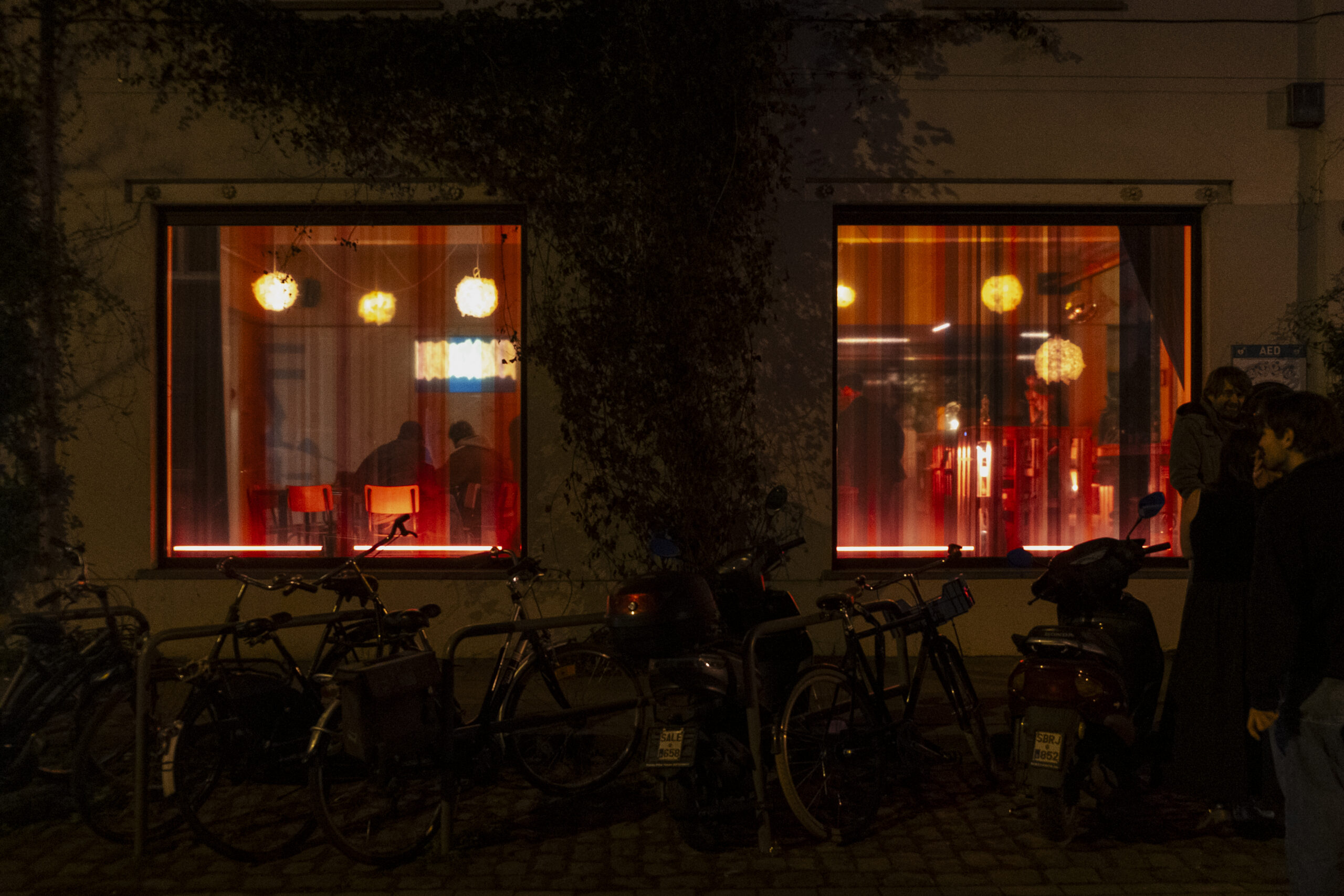
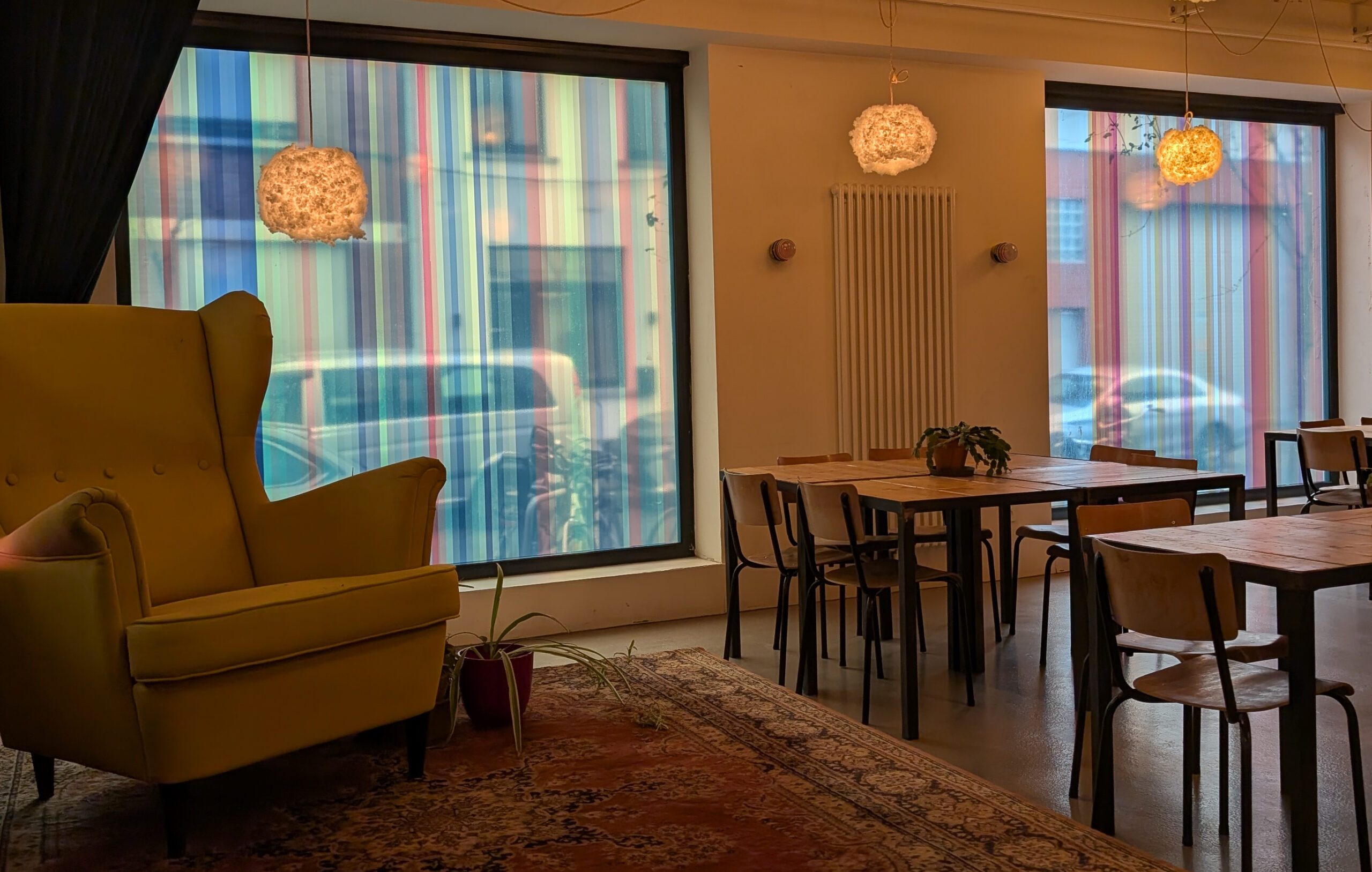
Left: Street view at night showing noise data visualized on windows. Right: Interior view of the transparent vinyl decals. Photography: Laura Vargas
Piece 02: Public Art as Data Infrastructure
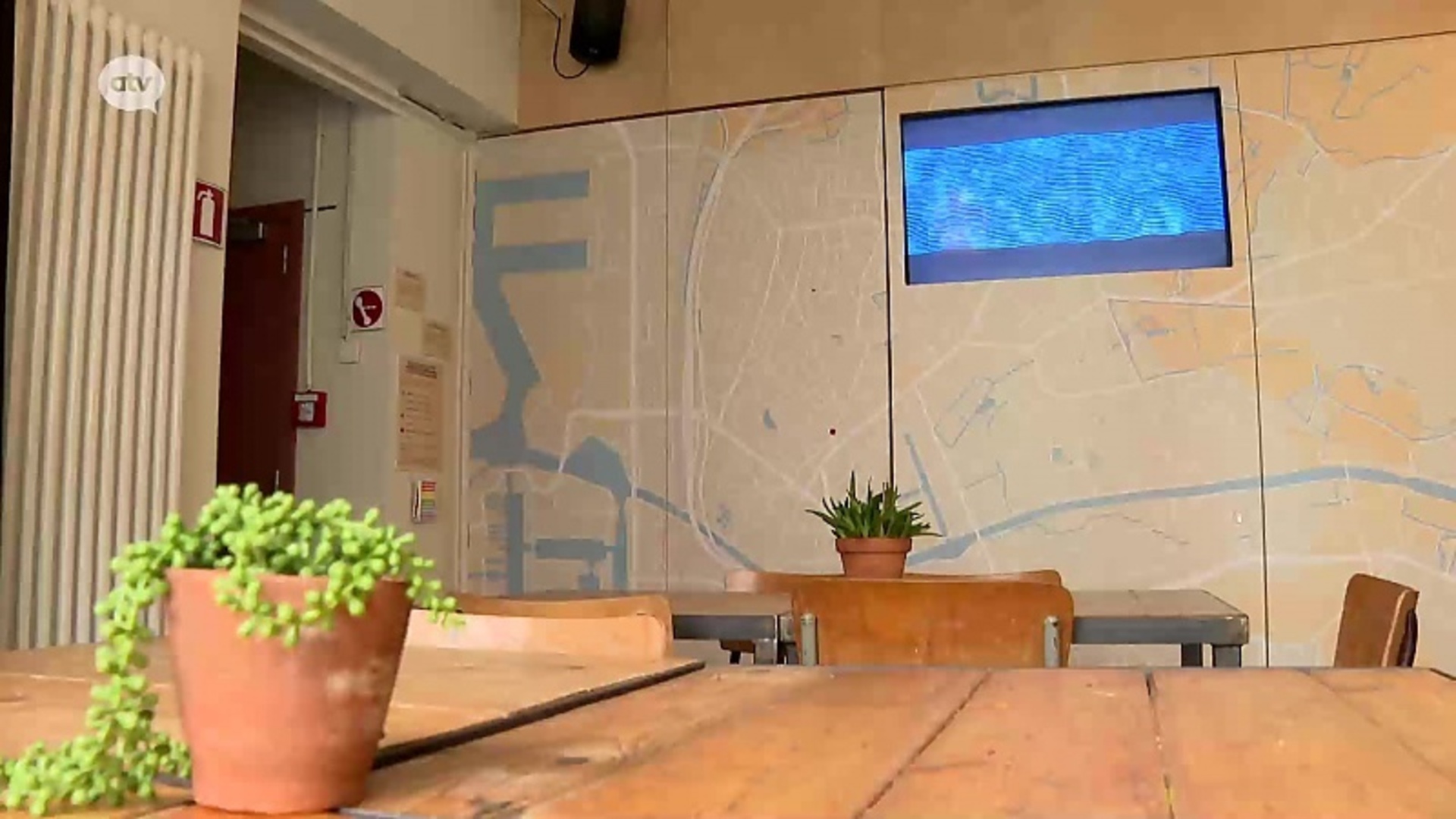
Inside the cultural center, visitors encounter a large-scale neighborhood map where they’re invited to contribute their own noise experiences through a color-coded sticker system. Rather than reporting decibel levels, community members mark specific locations with colored stickers representing how sound makes them feel in those spaces.
Critically, participants define their own sonic categories. The question isn’t “How many decibels?” but “How does this sound make you feel?”
Each sticker is a data point. Each placement is an act of creative expression AND community data generation — training data for AI models built on lived experience, not just sensor logs.
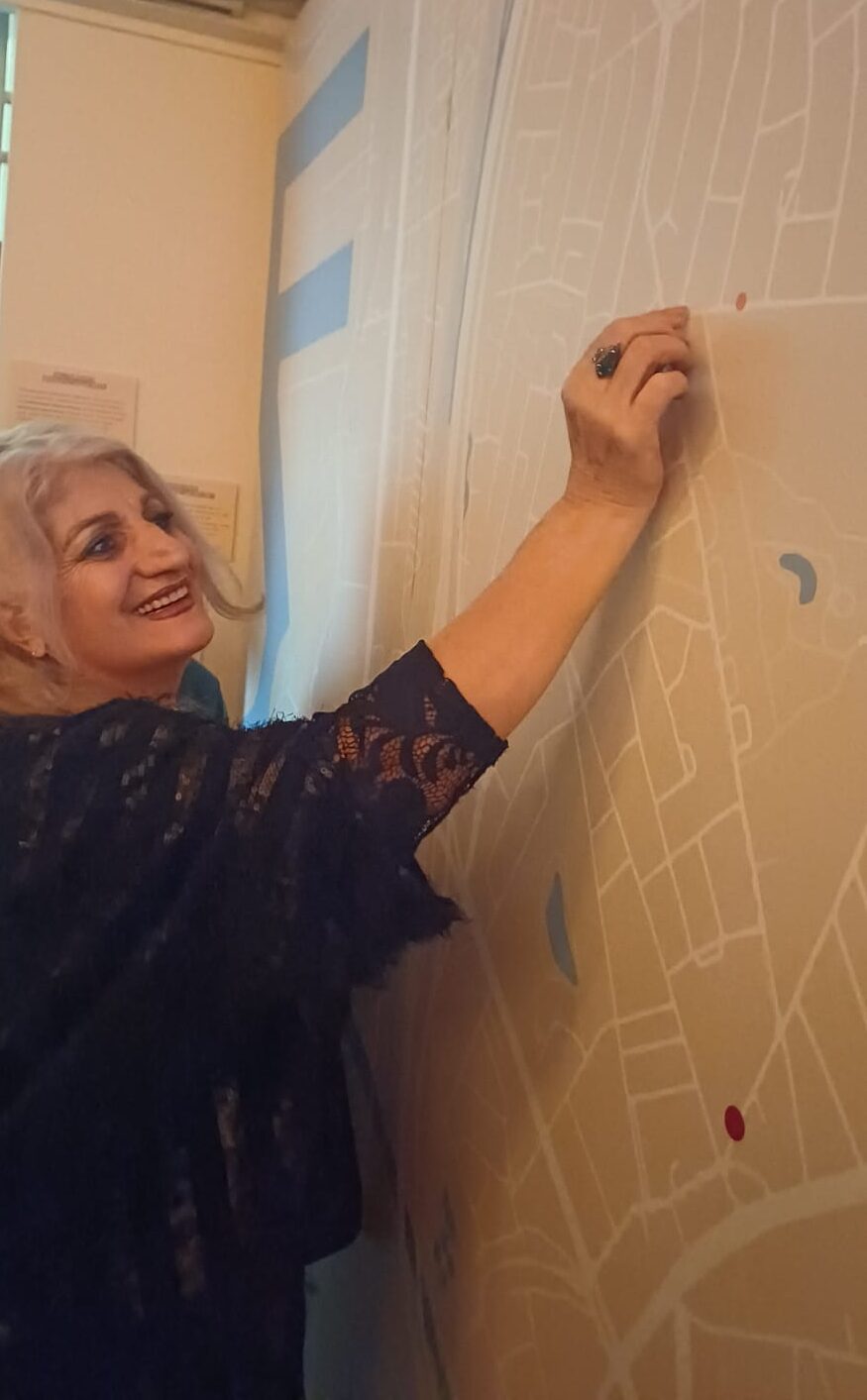
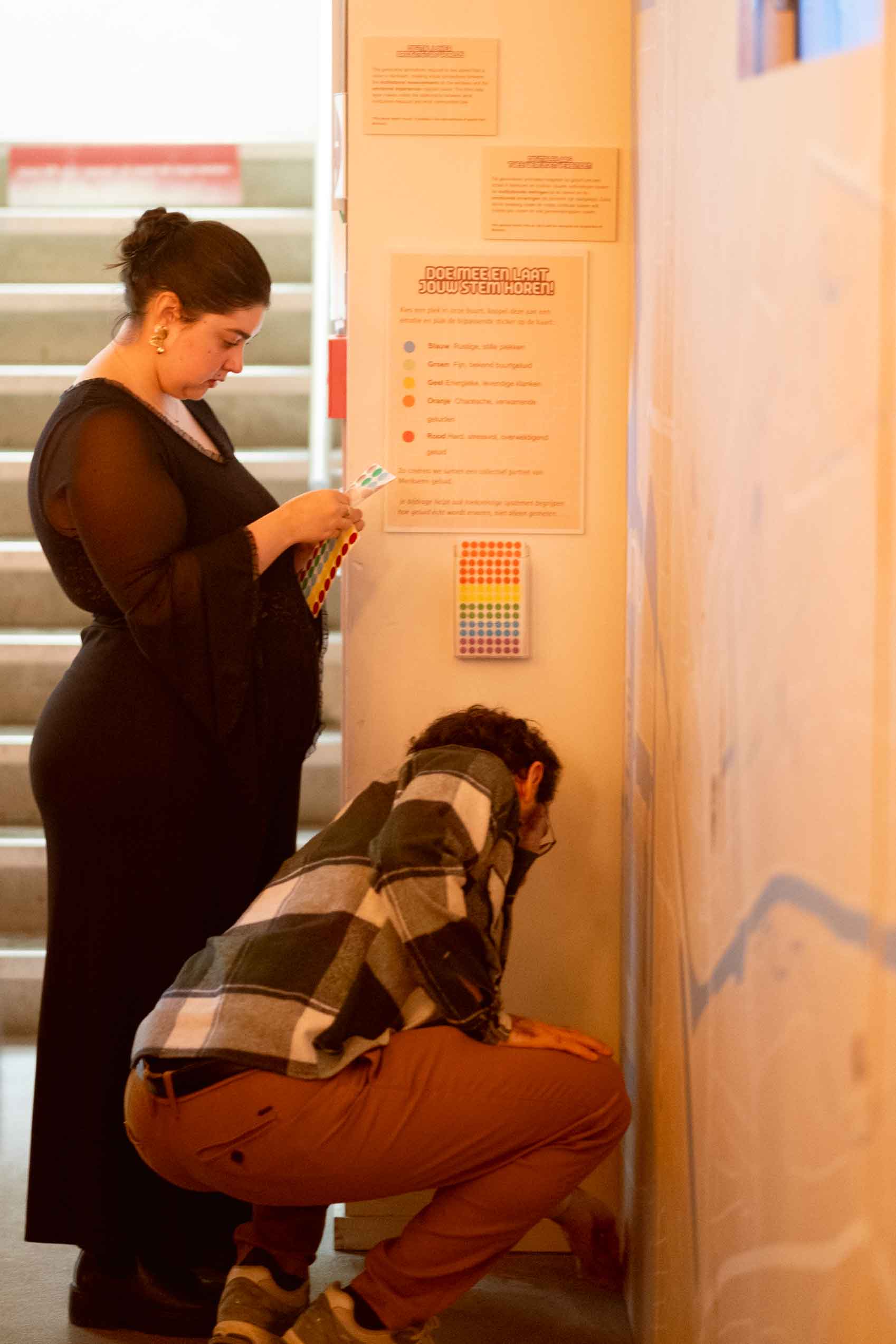
Community members contributing their noise experiences through color-coded stickers on the neighborhood map. Photography: Betty Matthysen
Piece 03: The Responsive Bridge
Interior screens display generative animations that transform live street noise decibels into visual waveforms — creating a real-time dialogue between institutional data on the windows (EEA measurements) and community emotion mapped on the wall (sticker responses).
The gap between what sensors measure and what communities feel becomes visible — for anyone walking through.
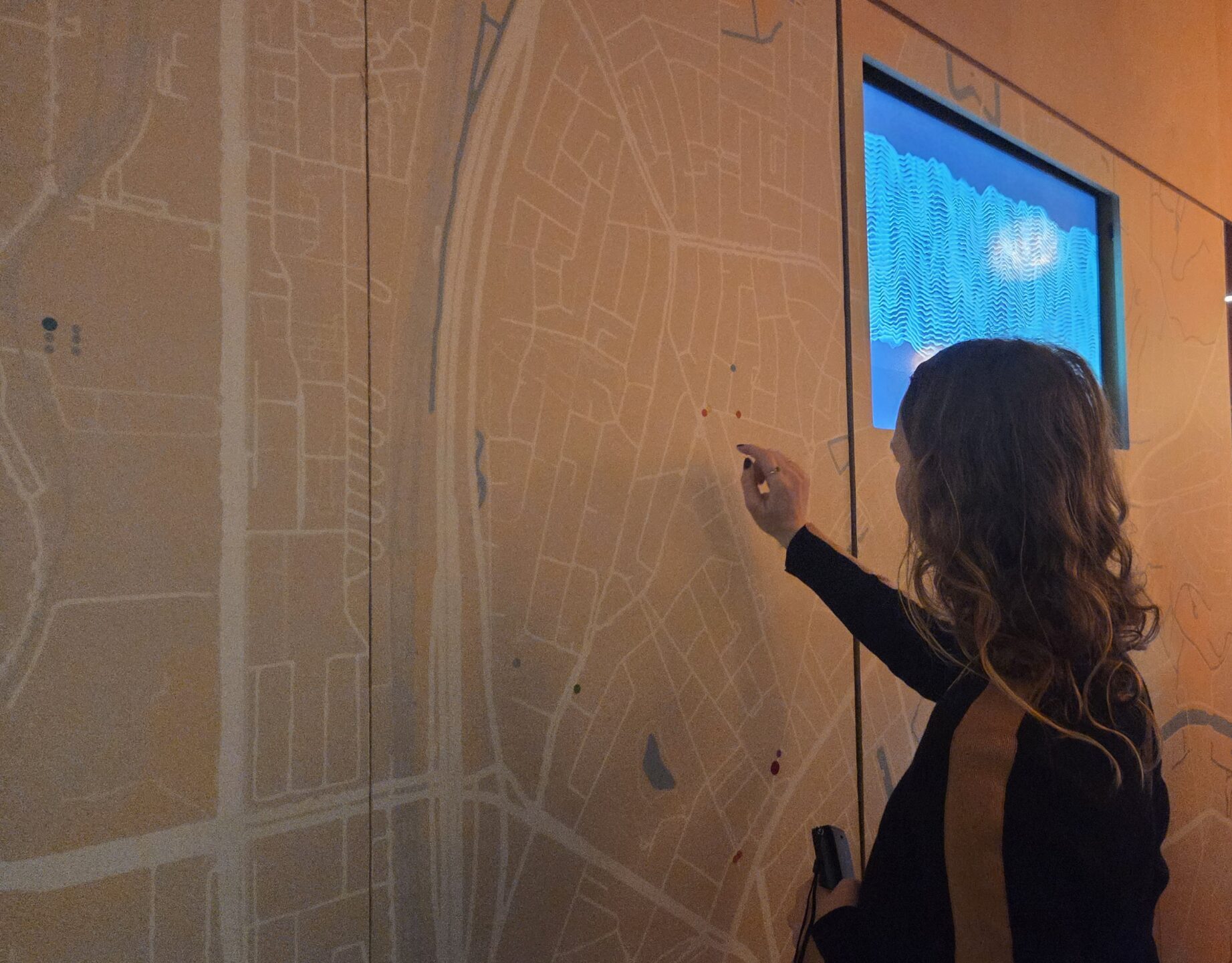
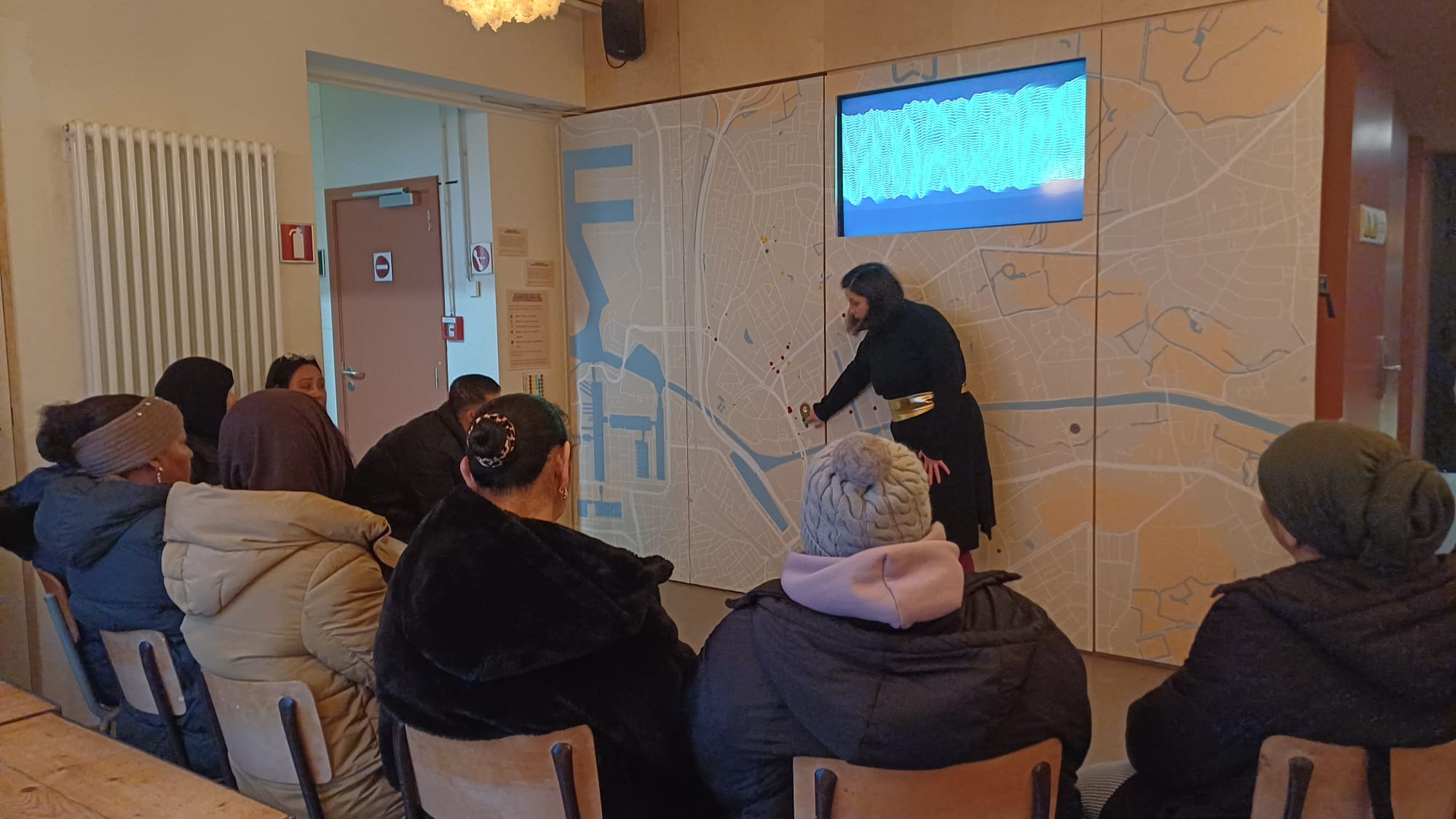
Interior screens translate live street-noise decibels into generative waveforms in real time. Video: Lina Maria Giraldo
“When communities help generate data themselves, lived experience becomes part of the record, shaping how environmental issues are understood, modeled, and ultimately addressed.”
Conceptual Framework
The installation makes three interconnected arguments:
Official environmental data is incomplete. Decibel measurements tell us sound intensity but nothing about sound quality, cultural meaning, or emotional impact.
Community knowledge is data. When residents describe noise as “tight,” “bright,” “heavy,” or “thin” — words that don’t exist in environmental engineering — they’re generating essential information about environmental conditions.
Community-generated data can train AI systems. Rather than using AI to analyze existing institutional data, this project inverts the model: community members create the foundational dataset that can teach future AI systems to understand environmental conditions in human terms.
Context & Impact
The project addresses a critical environmental equity issue: 8% of Antwerp residents experience continuous 70-decibel noise exposure, with disproportionate impact on working-class neighborhoods and immigrant communities. Yet these communities rarely appear in environmental datasets in ways that reflect their actual lived experiences.
Weaving Noise creates infrastructure for community environmental knowledge-making in two phases. First, the installation collects community-generated emotional and sensory data through participatory mapping. Second, this dataset can train AI models to understand noise not just as decibel levels, but as lived experience with cultural, emotional, and bodily dimensions.
The project asks: if AI systems increasingly shape environmental policy, whose data should train those systems? And crucially: what if communities generated that training data themselves?

Media Coverage
Gazet van Antwerpen / ATV — “Blauw staat voor rust, rood voor lawaai: opvallende kunstinstallatie in Merksem moet in kaart brengen hoe luid district écht is”
Merksemdok Cultural Center — “Jouw gevoel telt. Jouw stem is data.”